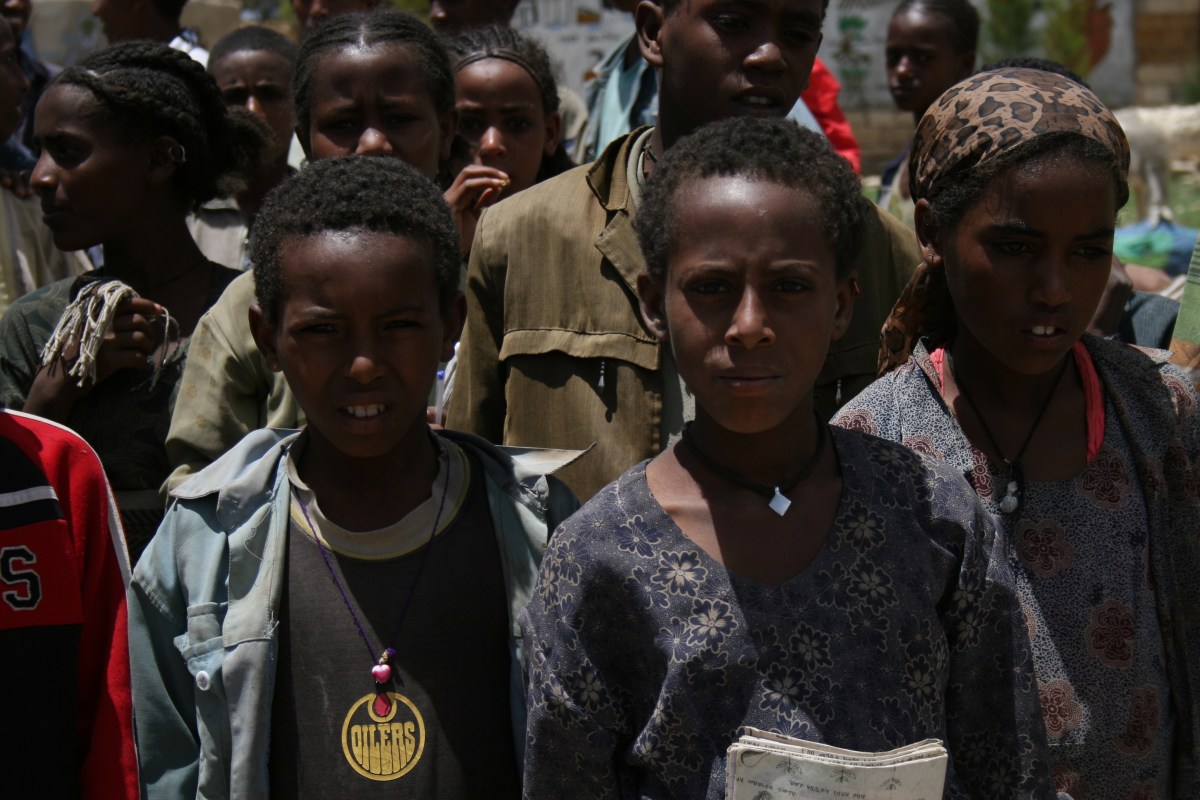
I recently returned from Ethiopia where I spent my time interviewing NGO leaders with the help of a local reporter. I’ve been to Ethiopia a few times because my daughter lives there with her husband and son. Their work involves them in the world of journalism and NGO relief programs. I also have a colleague who is an exiled political leader so the escalating repression of the press and of civil society organizations has been one of our frequent topics of conversation.
There is an election for the parliament set to take place on May 23 and in the last month two very critical reports have appeared on civil society freedoms in Ethiopia. One is by Human Rights Watch and you can find it at:
Human Rights Watch (March 24, 2010), One Hundred Ways of Putting Pressure. Violations of Freedom of Expression and Association in Ethiopia. http://www.hrw.org/en/reports/2010/03/24/one-hundred-ways-putting-pressure
The other is by Helen Epstein and you can find it at: Epstein, Helen (2010) “Cruel Ethiopia.” May 13. http://www.nybooks.com/articles/archives/2010/may/13/cruel-ethiopia/ (accessed May 12, 2010)
I’d also note that Obama included Ethiopia on his list of countries most repressive towards the press (with North Korea and Iran).
I’d heard extreme reports about restrictions on civil liberties and the freedom of association in Ethiopia, often explained as part of the government’s effort to stamp out political opposition leading up to next week’s election. I wanted to learn for myself what was going on. One reason for my interest is that I am a board member of the Association for Research on Nonprofit Organizations and Voluntary Action (ARNOVA) and it seems to me our organization ought to concerned when the civil society sector of a large country (second most populous in Africa with 93 million people) is dramatically restricted. Another reason for concern is that Ethiopia receives more foreign aid than any other country in sub-Saharan Africa. The government was routinely described to me as a Stalinist military dictatorship. Is there a problem that the U.S. government supports this repressive state hoping to thwart terrorism and also to hold off starvation among millions of people (U.S. food aid feeds 7 million people)?
My task of the next few days is to write a report on my interviews with NGO leaders and to give an interpretation of what I learned. This will not be easy to write because I believe western academics mostly expect African governments to be inefficient, corrupt, and authoritarian. People are likely to ask why Ethiopia is different from anywhere else and whether it really is our place to challenge every state that does not do things “our” way (that might be the American way or the UK way or the Swedish way).
In fact, I believe that the Ethiopian government has less graft than many African governments. (Helen Epstein testifies to this although one our NGO leaders complained that petty extortion by government is constant and always puts a leader like him in danger of being put in jail.) Also, it is striking as you travel around Ethiopia how many large public works projects are going on (including public schooling in the smallest, most remote towns). I’ve heard it said that Ethiopia follows a plan of what they call “Chinese Development”. You can imagine what this means. Authoritarian repression of speech and association but lots of roads, dams, and schools.
Helen Epstein’s article follows this line of analysis and then makes a devastating case about the inhumane application of humanitarian relief. Despite massive food aid and dramatic agricultural programs people continue to starve because (a) under land reform families are not given large enough plots of land to farm to support a framily (.35 hectare per family in Tigray where I visited) and (b) because according to the Human Rights watch report the ruling political party (the EPRDF) controls government services at the smallest local jurisdiction level and will not give basic aid unless families join the party (which some refuse to do).
It’s a complex story.
I’d love to see comments about why I (or we) should be concerned about the human rights situation in Ethiopia. I suppose as I move along in my spring writing project I’ll post more here.

 CARL MILOFSKY
One reply on “Civil Society in Ethiopia”
[…] I’m temporarily posting on an excerpt and link on behalf of Carl. Please follow this link for the full entry. Comments can be made below or on Carl’s new blog. […]